
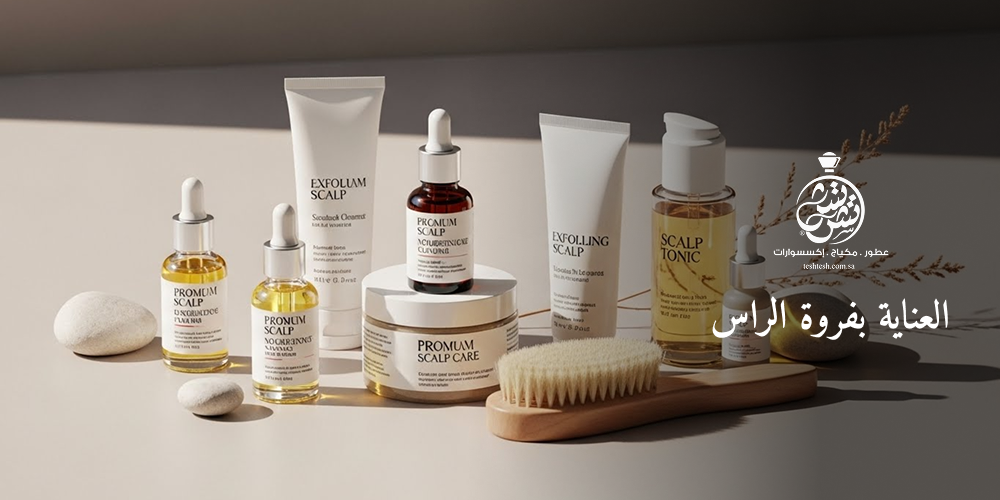
Scalp care One of the most important concerns is that The scalp is the environment that nurtures hair roots, and from it begins everything related to hair health, strength, and growth. Many people think that hair care simply means using a suitable shampoo or a weekly hair mask, but the truth is that beautiful hair starts with a healthy scalp. When this area is neglected, common problems appear such as dandruff, itching, weak follicles, hair loss, unpleasant odor, and even slow growth.
This comprehensive article from Teshtesh We will take you through a complete process to understand the nature of the scalp, its problems, and how to care for it to get stronger, softer, and fuller hair, using a simple routine and effective ingredients.
Why is scalp care essential?
Scalp care It is the foundation for healthy hair; it nourishes the follicles and helps them grow. Neglecting it causes the accumulation of oils, dandruff, weak roots, and hair loss. Therefore, taking care of it is a necessary step to obtain strong, shiny, and thick hair.
Reasons why scalp care is important:
- Stimulating blood circulation: This helps to strengthen the hair follicles and promote hair growth.
- Regulating the secretion of sebum and oils: To prevent dandruff, odors, and itching.
- Removing buildup and debris: Hair gel, dust, and sweat can clog pores.
- Prevention of dandruff and inflammation: By maintaining a clean and healthy environment.
- Improve hair absorption of therapeutic products: Such as serums and nourishing oils.
- Maintaining scalp moisture and balance: To reduce dryness, brittleness, and limb problems.
Types of scalps and how to identify them
Understanding your scalp type is the essential first step in choosing the right care products, as each type has its own specific needs and treatment methods that ensure scalp balance and hair health. When you accurately identify your scalp type, it becomes easier to choose the right shampoo, appropriate cleansing methods, and even the right type of oils or serums for you. Here are the basic scalp types and how to distinguish each one:
oily scalp
- The oils appear quickly, within 24 hours or less.
- Oily dandruff is common and may be accompanied by itching.
- The hair loses volume and becomes heavy quickly.
- An odor may appear on the scalp due to the accumulation of fats.
- You need a shampoo specifically designed to control oils without excessive drying.
- It is preferable to avoid heavy oils and conditioners on the roots.
dry scalp
- Having a soft crust resembling straw or dust.
- A feeling of tightness and constant dryness.
- Mild itching that may increase with cold weather.
- The scalp becomes sensitive when using a strong shampoo.
- You need constant moisturizing and gentle products.
- It is preferable to avoid shampoos full of sulfates and strong perfumes.
mixed scalp
- Oily at the roots, dry at the tips.
- The hair may look oily at the top and dry at the bottom.
- Prone to product accumulation in the root zone.
- You need a balance between cleansing and moisturizing.
- Use a scalp shampoo with a mask for the ends only.
- It is suitable for washing 2–3 times a week.
sensitive scalp
- It is easily irritated by odors or chemicals.
- It may show redness or a feeling of heat.
- Sensitive dandruff is common in this type.
- You need products that are free of perfumes and sulfates.
- It is preferable to use a medicated or very gentle shampoo.
- Avoid vigorous rubbing or harsh exfoliation.
The most common scalp problems
The scalp may experience problems that affect hair health due to stress, poor nutrition, unsuitable products, or neglect of cleaning. Knowing these problems helps you choose the right treatment and establish a routine that ensures scalp balance and hair health.
crust
- The appearance of white or yellow flakes on the hair and scalp.
- It is often accompanied by itching.
- It results from an overgrowth of fungi or an accumulation of fats.
- It may increase with stress or a change in the weather.
Inflammation and itching
- Redness or sensitivity of the scalp.
- An unpleasant itching sensation that may be accompanied by mild pain.
- They appear due to allergies to products or bacteria and fungi.
- It may be associated with dry or irritated skin.
Hair loss from the roots
- Noticeable shedding during combing or showering.
- Weakness in the hair follicles or stagnation of blood circulation.
- Clogged pores due to the accumulation of oils or products.
- It may also be related to hormonal factors or vitamin deficiencies.
Unwanted smells
- As a result of the accumulation of sweat and oils over long periods.
- Using a head covering for extended periods without ventilation.
- Unwanted bacterial growth on the scalp.
- Not cleaning the scalp thoroughly or using an unsuitable shampoo.
Product Build-up
- A feeling of heaviness in the roots.
- Loss of hair vitality and shine.
- Blocked pores and difficulty for air and protein to reach the hair follicles.
- This occurs due to the use of gels, sprays, and heavy oils without regular deep cleaning.
severe drought
- Cracked scalp or a burning sensation.
- The appearance of a dry, dust-like crust.
- Loss of moisture barrier due to harsh shampoo.
- It may increase with cold weather or the use of hot water.
A complete scalp care routine from Teshtesh
To maintain a healthy scalp and strong hair, the routine needs cleansing, moisturizing, and stimulating blood circulation. At Teshtesh, effective natural oils such as lemon oil and NOW ginger oil are available, which contribute to purifying the scalp, stimulating follicles, and promoting hair growth.
Daily care routine
- Massage the scalp for 3 minutes daily To stimulate blood circulation and activate the roots.
- Use A few drops of NOW ginger oil Apply to the scalp with a light massage to promote growth and stimulate the follicles.
- Keep the scalp ventilated and avoid covering the hair for long periods.
- Drink enough water to keep your scalp moisturized.
Weekly care routine
- Cleanse your scalp 2–3 times a week With a shampoo suitable for your hair type.
- Gently exfoliate your scalp once a week To remove dead skin and buildup.
- Use NOW Lemon Oil (30 ml)As a weekly treatment to purify the scalp, this can be done by:
- Dilute two drops of oil with a light carrier oil
- Massage the scalp for 5 minutes
- Leave it on for 15–20 minutes, then wash your hair.
- Apply a moisturizing mask On the edges only Not on the fur.
- Use lukewarm, not hot, water to protect the scalp barrier.
Deep care routine (once or twice a month)
- Process warm oil massage session Using a mixture of:
- One teaspoon of NOW ginger oil
- One teaspoon of NOW lemon oil
- The mixture is warmed slightly and massaged into the scalp to improve absorption and stimulate blood circulation.
- Leave it on for 30 minutes before washing for best results.
SOME BY MI Cica Peptide Treatment: The effective solution to combat hair loss (Added by Teshtesh)
Before starting the routine, it is recommended to use Peptide Sica Treatment from Sum by Mi It is a therapeutic serum that combines cica extract and peptides to strengthen hair follicles, stop hair loss, and restore the strength of hair roots.
Its main benefits
- Strengthening weak hair follicles and preventing hair loss.
- Stimulate blood circulation within the scalp to promote growth.
- Soothes sensitive scalps and reduces inflammation.
- Stimulate the growth of healthier new hair.
- Fast absorption without any greasy feel.
How to use
- Apply directly to the scalp after washing or to dry hair.
- Massage for one minute to activate absorption.
- Use daily for noticeable results.
Cica Peptide Treatment is now available at Teshtesh Store as an effective treatment solution for hair loss and scalp weakness.
Tips to avoid for maintaining a healthy scalp
To maintain a healthy scalp, bad habits that cause dryness, dandruff, and weak hair follicles must be avoided, because avoiding them is just as important as following the right routine.
- Avoid using hot water as it causes dryness and irritation of the scalp.
- Avoid rubbing the scalp with your fingernails to prevent scratches and infections.
- Avoid sleeping with wet hair as it increases fungal growth and hair loss.
- Do not apply conditioner to the scalp so as not to clog the pores.
- Avoid heavy oils that cause buildup.
- Reduce the use of styling products as they suffocate the scalp.
- Avoid changing shampoo frequently without need.
- Avoid covering your hair for long periods without ventilation.
At Teshtesh we provide you with effective natural scalp care products, such as NOW Lemon Oil and Ginger Oil, to help you strengthen roots and improve hair growth. With Teshtesh, achieving healthy, shiny hair becomes easier and faster.
More products Scalp care
Some By Mi Cica Peptide Anti-Hair Loss Treatment - 50ml
Cantu Shea Butter Hair Conditioner for Natural Hair, Combined Moisture Lotion, 283g
The Ordinary Multi-Peptide Hair Thickening Serum - 60ml